

If you suffer with depression or anxiety, it can be quite debilitating and get in the way of daily life. According to the CDC recent studies show about 1 in 5 Americans struggle with depression or anxiety, or both. That’s a lot of people, however not everyone has support for it. So, how can you treat it? Obviously therapy helps, however that is not accessible to everyone. Physical activity can also give you a boost, but our schedules are more demanding than ever and you can’t exercise all the feelings away.. Because of my kind heart, I have broken down treatment options from the smallest to the biggest. It can be helpful to start with the simplest options since when giving anything to your body, using a wrecking ball is likely overkill when you need a hammer, that will also be the most gentle to adjust and easiest on your nervous system. If there are too many moving parts, it’s hard to see what is working for you or not. We also don’t want to create more problems later on.
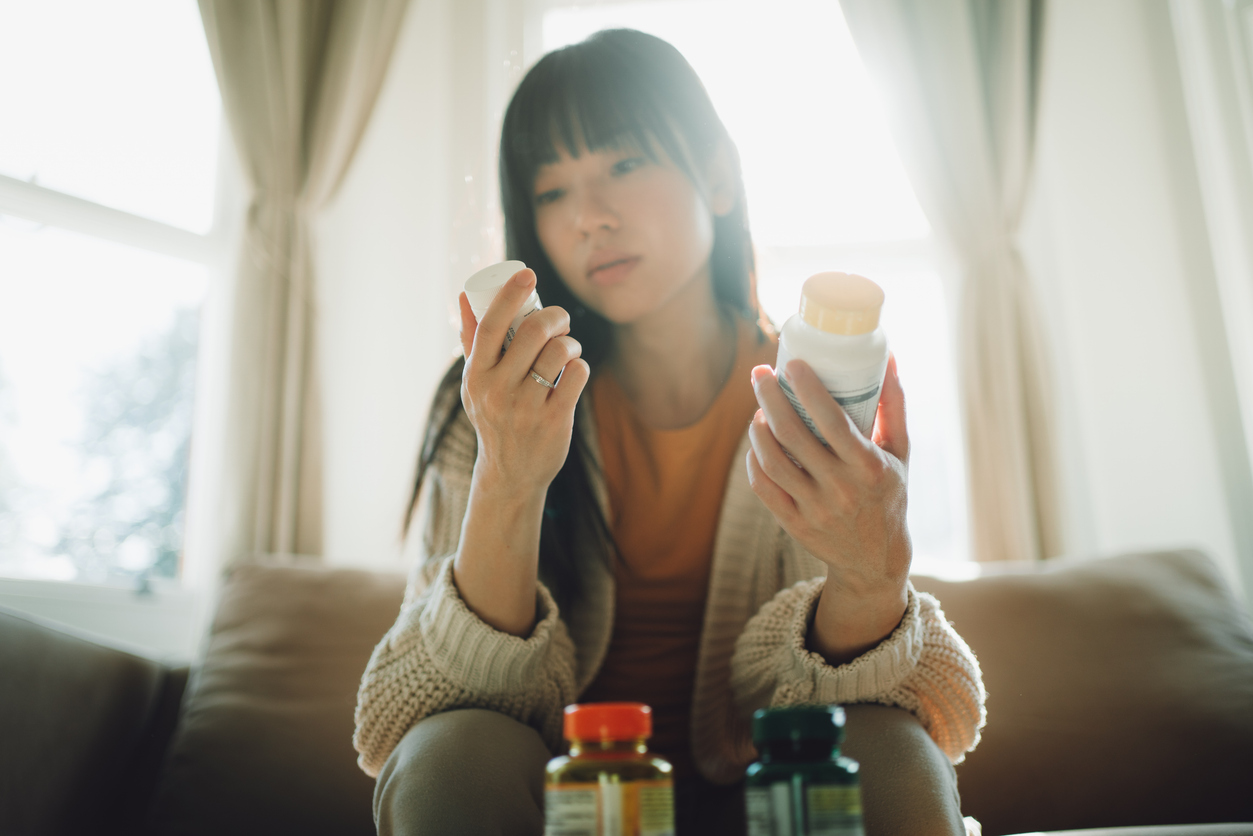
There are tons of vitamins, supplements and natural herbs that can dramatically affect your mood and wellbeing. Multivitamins can be helpful, however most people need more customization. Some nutrients need to be taken at different times of the day or with a meal. If you want to explore some natural options, check with your doctor since there can also be drug interactions and side effects. Natural products like nutrients, vitamins, supplements and herbs can sometimes have more interactions than prescriptions. Pharmacists may want you to take them at opposite times of medication.Most doctors do not find herbs noteworthy on your chart, however you super extra need to make sure to communicate herbs and dosage if you have an upcoming surgery.
Vitamins and Nutrients
Some people have seen mood benefits by changing their vitamin intake. A one-a-day vitamin is better than nothing, however it is important to see your doctor and get blood work to look for any deficiencies you may have of essential nutrients, too much of a good thing can also cause issues. For example, I know lots of people taking Melatonin 🙁 which only offers sleep 3 minutes faster. Yes, only 3 minutes faster. Plus it develops tolerance quite quickly so that 3 minute saver disappears fast, it’s really only helpful for jet lag, but not long term. And recently they discovered that long term use is horrible for your heart. Thumbs down to melatonin.
Another simple thing is adding more fiber to your diet. Mental wellbeing starts in the gut. Brain chemistry works better when you eat more fiber so your gut can develop butyrate, a very very good thing. Instead of depriving yourself, try adding on one small thing a day. Look for leafy greens, oatmeal, beans and seeds. Even the powder you dissolve in water can be helpful.
Our brains HAVE to have Omega 3s, so you shouldn’t skimp on these even if your mood is perfectly balanced. Most people get these through fish oil and there are algae options for those who don’t eat seafood. There are even a lot of heart benefits too, these are essential!
Now these are the little Mother Terresa’s for your body! Magnesium Glycinate, No joke, I’ve even seen some clients just take this supplement and feel it’s enough to keep them functioning so much better. So what do they do? These lil heroes help with regulating nerve and muscle function, and keep blood sugar and inflammation low. It helps build bone, protein and DNA, as well as antioxidant properties. And here is where it really makes a notable difference for most; sleep. Everyone knows that if your sleep sucks, your life sucks. Take an hour or two before bedtime to help bring on the ZZZ’s. There is also one very important note, make sure to get magnesium GLYCINATE, if you get other kinds of magnesium that can be explosive, like seriously, that’s what they give to prepare for colonoscopies. Don’t say I didn’t warn you!
GABA is the most abundant neurotransmitter in your central nervous system. They help with cell communication and are like little messengers for your nerves. The synthetic form of GABA is a medication called Gabapentin, which people take to treat seizures and nerve pain, so you can see how detrimental it is to your body without enough of it.
L-Theanine is often found in green and black teas and some types of mushrooms. This stuff really really helps lessen anxiety without the zombie effect. This amino acid can increase alpha brain wave activity, modulate cortisol levels (that’s the stress hormone), and help balance out neurotransmitters. Many doctors suggest this supplement when women go through perimenopause because it really balances out your mood.
SAMe, helps regulate your hormones, which is obviously related to your mood and wellbeing. A lot of people like it well, however it can often cause digestion issues or increase anxiety, and careful if you already take antidepressants though, this can cause interactions.
Herbs and Compounds
Start simple. Try replacing your morning java with Ginseng or opting for lower-caffeine options like matcha and green teas. Another pro tip, wait an hour or two before drinking caffeine after you wake so you don’t reinforce your body depending on that hit to get going. And ditch the energy drinks, those Red Bulls work great, until they don’t, then you’re left with a dependency that is not even effective. These are just bandaids, (like the plasticy barely sticky dollar store bandaids).
You need to watch this clip —> meta analysis (study of studies) show the natural herbs Saffron and Curcumin (compound in turmeric), to be incredibly helpful for many. These are the holy grail here, folx. They have the same benefits as antidepressants and minimal side effects. So what do they do? In a nut shell, they reduce inflammation in your body which in turn supports gut health, heart health and brain health. If I could only take one thing on this entire list, I would personally pick saffron. I have seen the most difference in my life by taking this one simple single herb.
Most people have heard of things like Valerian root as it popularized on Game of Thrones. It’s so common that it’s even sold in teas at the grocery store and can help relax you before bedtime. (If drinking more liquid wakes you to use the bathroom then get capsules.) Brands Sleepytime, Sweet Dreams or Tazo Dream carry this herb to help you fall asleep better and stay asleep longer. If you’re not a fan, herbs like Lavender and Chamomile are also known for their relaxing properties and help lull you off to sleep.
Some other herbs that people find beneficial for reducing anxiety or depression are Ashwagandha and Kava Kava, Ashwagandha is known to promote relaxation and reduce stress and anxiety by lowering cortisol levels. Kava kava is a natural relaxant, kinda opposite to caffeine. It also doesn’t impair cognition, so you won’t get a foggy head.
Most people have heard of St. John’s Wort. It’s a popular over-the-counter supplement to support mood. It can cause digestion problems, so take with food for sure. Also it affects the potency of any other medications you take, so it makes things like birth control or blood pressure meds less effective.
Chai Hu Jia Long Gu Mu Li Tang yes, it’s a mouthful and I won’t even try to pronounce it. This is a blend of Chinese herbs and has also been used to support mood and reduce insomnia and is most effective in addition to antidepressants, so you can stay at a lower dose of the prescriptions if you want (less side effects). It is made up of bupplerum, dragon bone, oyster shell, rhubarb, cinnamon, jujube, ginseng, and ginger. (I do think capsules are better, because if you buy the granules or powder to mix with water it tastes really really bad. 😉 It can cause digestion problems, however that is minimal compared ot some other medications’ side effects.
I hope this quick rundown simplifies a lot of things because it can be a lot. And since many of the options are not monitored by the FDA or another entity it is always important to find reputable brands. Remember just because something is natural doesn’t mean it’s harmless. Arsenic is natural but obvs, that is not good for you.